
Speed regulation method of stepping motor driver
Stepping motor driver can adjust the speed of stepping motor by adjusting the pulse frequency of the input driver and the subdivision parameters of the driver, in fact, it is to control the number of steps of stepping motor per unit time.
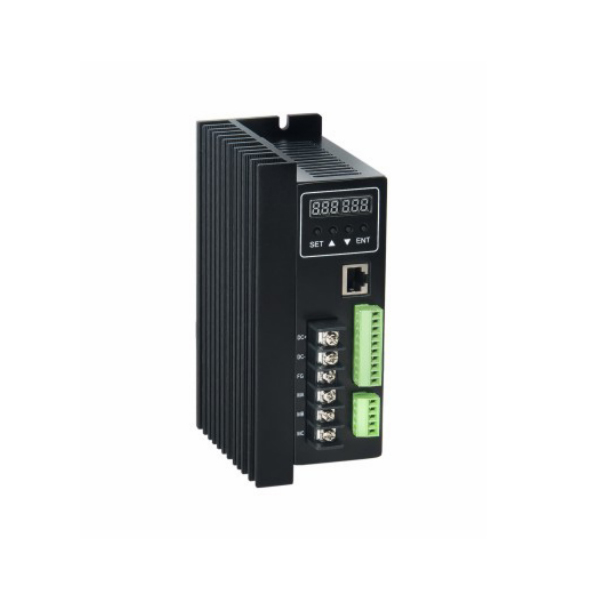
The ways of speed regulation are as follows:
1.Speed regulation by changing pole logarithm:
Advantages: ① No additional slip loss and high efficiency; ② The control circuit is simple, easy to maintain and low in price; ③ Smooth speed regulation with high efficiency can be obtained by cooperating with stator voltage regulation or electromagnetic slip clutch.
Disadvantages: Stepwise speed regulation can not realize stepless smooth speed regulation, and due to the limitation of motor structure and manufacturing process, only 2 ~ 3 kinds of pole pairs of step speed regulation can be realized, and the speed regulation range is quite limited.
2.Frequency conversion:
Advantages: ① No additional slip loss, high efficiency and wide speed regulation range; ② The purpose of saving electricity and protecting the motor can be achieved when running at low load for a long time or when starting and stopping frequently.
Disadvantages: The technology is complicated and the price is high.
3.Commutator motor speed regulation:
Advantages: ① It has simple structure of AC synchronous motor and good speed regulation performance of DC motor; ② The power supply voltage is used at low speed, and the back emf of stepping motor is used for natural commutation at high speed, so the operation is reliable; ③ No additional slip loss and high efficiency, which is suitable for starting and adjusting speed of high-speed and large-capacity synchronous motors.
Disadvantages: The overload capacity is low, and the capacity of the original motor cannot be fully utilized.
4.Cascade speed regulation:
Advantages: ①Slip energy generated during speed regulation can be used back. High efficiency; ②The capacity of the device is directly proportional to the speed regulation range, which is suitable for 70% ~ 95% speed regulation.
Disadvantages: Low power factor, harmonic interference, no braking torque in normal operation, and suitable for single quadrant operation load.
5.Stator voltage regulation and speed regulation:
Advantages: ①Simple circuit, small device size and low price; ②Easy to use and maintain.
Disadvantages: ①Slip loss is increased during speed regulation, which makes the rotor heat and has low efficiency; ②The speed regulating range is relatively small; ③High slip motors, such as specially designed torque motors, are required, so they have soft characteristics and are generally applicable to asynchronous motors below 55kW.
6.Electromagnetic slip clutch speed regulation:
Advantages: ①Simple structure, small control device capacity and low value; ②Reliable operation and easy maintenance; ③No harmonic interference.
Disadvantages: ①The speed loss is large, because the slip of the electromagnetic slip clutch itself is large, so the maximum speed of the output shaft is only 80% ~ 90% of the synchronous speed of the motor; ②During speed regulation, all the differential power is converted into heat energy loss, which is inefficient.
7.Rotor series resistance speed regulation:
Advantages: ①Low technical requirements and easy to master; ②Low equipment cost; ③No electromagnetic harmonic interference.
Disadvantages: ①Series cast iron resistors can only be adjusted in stages. If the liquid resistor is used for stepless speed regulation, the maintenance and maintenance requirements are higher; ②The additional slip power in the speed regulation process is all converted into the loss in the form of series resistance heating, and the efficiency is low. ③The speed regulating range is not large.